Views: 0 Author: Site Editor Publish Time: 2026-06-10 Origin: Site


Process engineers face a constant battle. They must balance reaction efficiency against rising raw material costs. Finding highly active yet economical catalysts remains difficult. Enter the nickel-aluminium alloy. It serves as a vital precursor for activated sponge catalysts. You extract the aluminium to reveal a high-surface-area nickel skeleton. This transition drastically improves process economics for specific reduction reactions. However, you must strictly manage activation protocols and safety risks. In this article, we explore how these precursor materials outperform precious metals in bulk applications. You will learn about activation mechanics, handling procedures, and evaluation criteria. We provide actionable frameworks for scaling your reactions safely. By mastering these variables, procurement teams and facility managers can secure stronger margins and highly reliable production cycles.
Margins in the chemical industry depend heavily on reaction efficiency. Catalyst degradation quickly destroys profit. High initial capital expenditures for noble metals tie up vital cash flow. Process engineers need robust alternatives. You must define clear success criteria to justify changing your catalyst supplier. Focus heavily on turn-over frequency (TOF) and turn-over number (TON). These metrics dictate how fast a catalyst works and how long it survives. High TOF means shorter batch times. High TON means fewer catalyst changeovers.
Selectivity also matters deeply. Multifunctional molecules require precise conversion pathways. If a catalyst saturates the wrong bond, your yield of the target product plummets. Downstream purification costs then skyrocket. Finally, you need cost predictability per kilogram of finished product. Platinum-group metals suffer from wild price swings driven by global markets. Plants need materials offering high mass-transfer rates. Thermal stability is equally critical for exothermic reactions. Identifying the right precursor guarantees long-term operational success, allowing you to escape the financial stress of volatile precious metal markets. You must transition away from legacy systems draining your operational budget.
Let us break down the activation phase. You start with a rigid, inactive precursor. You expose it to strong sodium hydroxide. This initiates an alkaline leaching process. The transformation relies on precision.
This procedure creates an immense internal surface area. Active sites multiply exponentially across the microscopic landscape. This specific sponge structure excels during hydrogenation. It actively adsorbs hydrogen gas and organic substrates simultaneously. The porous network traps the molecules, forcing rapid interaction. You see massive efficiency gains immediately. Converting nitriles to primary amines becomes faster and cleaner. Saturating carbon-carbon double bonds requires less aggressive heating.
Durability also improves significantly. The base matrix retains its structural integrity despite being highly porous. You can control particle size distribution during the initial metallurgical milling. This control directly affects catalyst recovery. Slurry reactors require rapid settling rates to minimize downtime. Optimal particle sizing ensures you capture the active metal easily after a batch finishes. Fine powders might filter too slowly. Coarse grains might lack sufficient surface area. Finding the exact sweet spot ensures maximum conversion and effortless filtration.
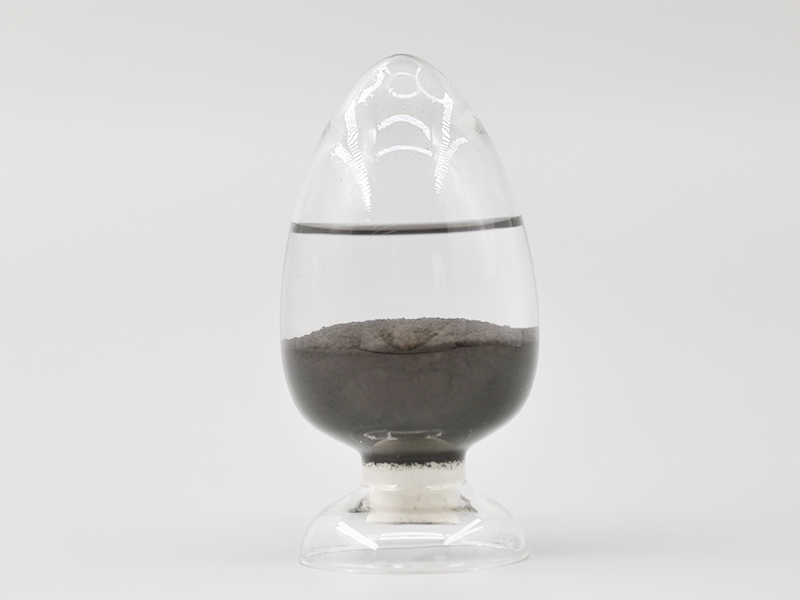
Choosing the right catalytic materials involves strict economic scrutiny. Capital expenditure differences are staggering. A bulk precursor costs a fraction of palladium or platinum on carbon. You must also evaluate long-term lifecycle expenses. Look closely at recovery, regeneration, and disposal. Precious metals demand expensive off-site reclamation. You must ship spent palladium back to specialized refineries. This incurs heavy transport fees and administrative burdens. Activated skeletal metals often allow simpler in-house recycling or cheaper bulk disposal.
Performance parity exists in many standard chemical reactions. Activated nickel regularly matches noble metals in overall yield. It sometimes surpasses them in bulk saturation tasks where rapid hydrogen uptake is necessary. However, strict limitations do exist. Reactions requiring extreme low-temperature conditions favor noble metals. Highly specific stereoselectivity also gives palladium a clear edge. You must test your specific substrate to confirm parity.
Supply chain stability strongly favors base metals. Geopolitical risks heavily influence precious metal pricing. A single mining dispute can double the price of platinum overnight. Sourcing abundant elements mitigates these massive price volatilities. Your procurement team gains predictable forecasting. They can lock in annual budgets without fear of sudden market spikes.
| Attribute | Activated Nickel Sponge | Palladium/Platinum on Carbon |
|---|---|---|
| Initial Capital Expenditure | Low to Moderate | Very High |
| Market Pricing Volatility | Highly Stable | Extremely Volatile |
| Bulk Hydrogenation Yield | Excellent | Excellent |
| Stereoselectivity | Moderate | Superior |
| Recycling Complexity | Low (Often local recovery) | High (Requires specialized off-site reclamation) |
Implementing a Ni-Al alloy requires serious safety infrastructure. The activation process creates a severe pyrophoric hazard. Dry activated nickel ignites instantly upon contact with atmospheric oxygen. You must prevent dry exposure at all times. Storage protocols demand strict, unwavering adherence. You must keep the catalyst fully suspended in liquid. Use distilled water or appropriate organic solvents like ethanol.
Facility readiness is non-negotiable. You need robust inert gas blanketing systems. Nitrogen or argon must flood the reactor during charging and discharging phases. Even a brief exposure to air can trigger a localized fire. Spent catalyst handling requires identical vigilance. Filtration equipment must remain sealed under inert atmospheres until the material is fully deactivated.
Environmental compliance adds another layer of complexity. Leaching generates highly alkaline wastewater containing aluminate salts. You must neutralize this stream before municipal discharge. Regulatory bodies enforce strict guidelines regarding worker safety. Managing heavy metal dusts during the raw precursor handling phase requires specialized ventilation. You must install HEPA-filtered dust extraction units near the mixing vessels. Process engineers must secure proper personal protective equipment for all operators. Face shields, alkali-resistant gloves, and respiratory protection are mandatory during the caustic leaching steps.
Before purchasing, you must verify process compatibility. Ask yourself specific questions about your facility's operational limits. Is your target reaction a bulk desulfurization? Can your existing reactor handle slurry-phase operations? Do you have precise temperature control mechanisms to manage exothermic spikes? Once confirmed, you move to vendor evaluation.
| Operational Factor | Requirement for Success |
|---|---|
| Reaction Type | Bulk saturation, desulfurization, or nitrile reduction. |
| Reactor Design | Slurry-phase capable with vigorous mechanical agitation. |
| Temperature Control | Robust cooling jackets to manage exothermic heat during activation. |
| Safety Infrastructure | Inert gas blanketing (Nitrogen/Argon) and wet-handling capability. |
Evaluate potential vendors strictly. Do not rely solely on pricing. Consider these primary criteria:
Always structure a rigorous pilot testing phase. Do not scale blindly based on literature values. Measure actual leaching times in your own lab environment. Track catalyst settling rates under your specific agitation profiles. Calculate the true cycle life by running multiple consecutive batches. This data informs your final procurement decision and prevents costly large-scale failures.
We have explored the massive potential of these unique precursors. They offer a structurally robust pathway for scaling chemical production. They provide an economically viable solution for high-volume catalytic processes. You can escape the crushing financial burden of precious metal volatility. However, success depends entirely on your facility's readiness. You must equip your plant for safe handling, rigorous activation, and environmental compliance. Cutting corners on safety protocols will lead to catastrophic failures.
Your next actionable step is straightforward. Initiate a technical consultation with a specialized metallurgy vendor. Request small sample batches immediately. Ask for specific phase-composition data and purity certificates. Use this data to run rigorous pilot testing in your own facility. Compare the settling rates and turn-over frequencies against your current baseline. Careful preparation guarantees a smoother transition. It maximizes process economics and solidifies your competitive advantage in the market.
A: The standard benchmark is a 50:50 weight ratio. This specific balance encourages the formation of highly leachable intermetallic phases, primarily NiAl3 and Ni2Al3. Variations in this ratio alter the phase distribution. A lower aluminium content reduces the final porosity, limiting active sites. Higher aluminium content can weaken the remaining skeletal structure. Maintaining the 50:50 ratio ensures optimal pore formation and structural integrity after activation.
A: Reactivation is possible but highly limited. You can often extend a catalyst's lifespan through rigorous washing protocols. Washing with specific solvents helps remove accumulated organic poisons from the active sites. However, physical degradation or irreversible sulfur poisoning permanently destroys activity. Once washing fails to restore acceptable turn-over frequencies, you must proceed with disposal or send the material for bulk recycling.
A: Leaching conditions completely dictate the final catalyst architecture. The temperature of the caustic solution and its concentration control the aluminium dissolution rate. Aggressive, high-temperature leaching creates massive macropores but risks sintering the delicate nickel structure. Slower, controlled leaching generates fine mesopores and maximizes total surface area. You must balance these parameters to achieve the exact pore size required for your specific molecular substrates.
A: The activated material is highly pyrophoric. You must absolutely avoid any exposure to dry air. Always store and transfer the catalyst suspended in water or an inert organic solvent. Facilities must utilize nitrogen or argon blanketing during reactor charging and filtration. Additionally, the activation process creates highly caustic sodium aluminate byproducts. You must implement rigorous wastewater neutralization protocols before environmental discharge.


