Views: 0 Author: Site Editor Publish Time: 2026-06-07 Origin: Site


For nearly a century, Raney nickel catalysts have remained foundational materials for industrial and synthetic processes. Selecting the right variant for commercial scale-up requires moving beyond basic textbook chemistry. Modern chemical processing demands strict control over selectivity, settling rates, and active lifecycles. While base metal options offer a highly effective alternative to platinum or palladium groups, improper grade selection can ruin your process. Mishandling these materials often leads to rapid deactivation, safety hazards, or poor reaction yields.
This guide breaks down the commercial applications, critical evaluation criteria, and scale-up realities. We help process chemists and procurement teams evaluate these materials for their complex workflows. You will learn practical strategies to handle pyrophoric risks safely. We also explore how to match specific alloy grades to your target molecules. Finally, we provide operational insights to maximize the active lifespan of your materials.
Versatile Functional Group Reduction: Highly effective for converting nitriles to amines, saturating carbon-carbon double bonds, and executing specialized desulfurization (e.g., Mozingo reduction).
Strict Operating Parameters: Performance degrades rapidly in acidic environments (pH < 5.5); specialized doped variants (e.g., Mo or Cr) are required to prevent corrosion in complex matrices.
Handling & Safety Realities: Highly pyrophoric in dry states; requires strict inert-gas or wet-slurry handling protocols and controlled acid destruction for disposal.
Lifecycle Economics: Total cost of ownership depends heavily on supplier reactivation capabilities and the shelf-life limitations of high-activity grades.
Industrial processing relies heavily on porous metal networks to drive massive volume demands. Chemical manufacturers utilize them daily to transform basic precursors into high-value commercial chemicals. The most prominent industrial application involves reducing benzene into cyclohexane. This reaction creates the essential building blocks for global nylon production. Similarly, food and pharmaceutical industries depend on these materials to saturate dextrose. This specific reduction pathway yields critical sugar alcohols like sorbitol and xylitol. You need highly active sites to sustain these massive throughputs efficiently.
Beyond bulk chemical manufacturing, these porous structures excel at broad-spectrum functional group reduction. They effortlessly reduce nitro compounds, alkynes, and stubborn carbonyls. The unique sponge-like architecture provides an incredible advantage during these reactions. It holds significant volumes of hydrogen directly within the porous matrix. This in situ hydrogen storage capability accelerates reaction kinetics. It allows the metal to maintain high local hydrogen concentrations directly at the active catalytic sites.
Desulfurization workflows represent another vital commercial application. Organic synthesis often requires cleaving stubborn carbon-sulfur bonds. Most traditional precious metals suffer rapid, permanent poisoning when exposed to sulfur radicals. However, porous nickel networks overcome this limitation brilliantly. They facilitate specialized reactions like the Mozingo reduction. In this pathway, chemists convert carbonyls to thioketals. They then use the metal matrix to strip away the sulfur entirely. The organic molecule reduces down to a simple alkane while the metal safely absorbs the sulfur byproduct.
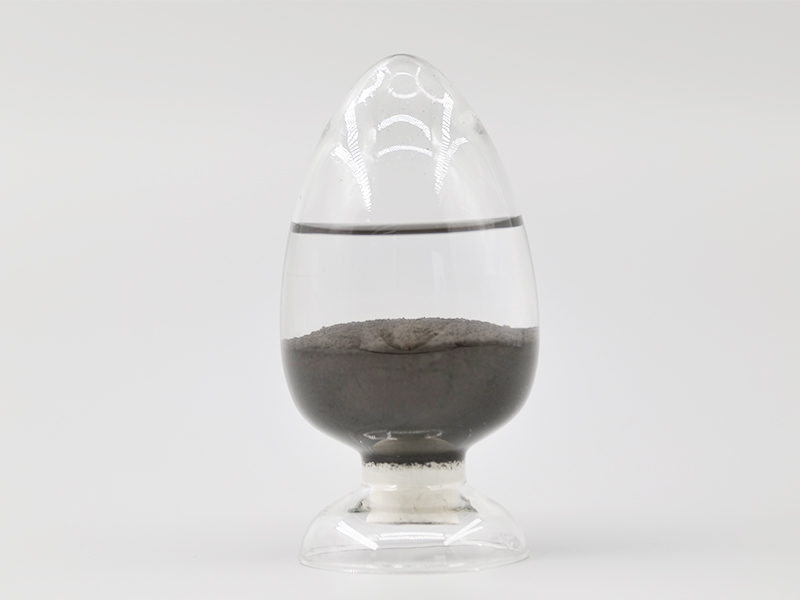
You cannot evaluate Ni-Al catalysts purely on their chemical composition. Structural activity drivers matter far more in practical applications. Manufacturers create these materials through an aggressive alkaline leaching process. They treat a solid nickel-aluminum alloy using concentrated sodium hydroxide. This caustic bath preferentially dissolves the aluminum out of the solid crystal. It leaves behind an incredibly porous, sponge-like nickel skeleton. This remaining structure possesses massive BET surface areas. They average around 100 m²/g. This immense surface area dictates the baseline activity of the resulting material.
Engineers must choose between standard industrial grades and highly specialized high-activity preparations. Industry professionals classify specialized preparations using the W-1 through W-7 series nomenclature. Standard grades prioritize longevity and physical toughness. They handle general-purpose batch reactions exceptionally well. High-activity grades serve entirely different needs.
Consider the W-6 variant. It provides exceptionally high activity for difficult molecular reductions. However, it suffers from rapid structural degradation. It loses its peak efficiency within a few weeks. You must store it carefully in refrigerated absolute ethanol to slow this decay. Standard grades easily outlast W-6 preparations under normal plant conditions.
Grade Type | Activity Level | Typical Shelf Life | Primary Use Case |
|---|---|---|---|
Standard Industrial | Moderate to High | Up to 1 Year | Bulk commercial reductions (e.g., Benzene, Dextrose) |
W-2 Series | High | Months (Requires care) | General lab-scale synthesis and fine chemicals |
W-6 Series | Extremely High | 2 to 4 Weeks | Stubborn alkynes and low-pressure reductions |
Physical handling metrics also dictate success on the production floor. A practical chemical catalyst must do more than just react efficiently. It must separate cleanly from the liquid reaction phase once the process completes. Settling and filtration characteristics directly impact plant profitability. Poor settling rates create cloudy mixtures. These mixtures clog expensive industrial filters. They cause severe downtime during batch processing operations. You should always evaluate the density and particle size distribution before authorizing a scale-up.
Chemical processing environments expose reactive metals to extreme operational stresses. The pH limitation remains the most critical operational constraint. Raney nickel dissolves rapidly in acidic environments. If your reaction mixture drops below pH 5.5, the acid attacks the delicate structural network. The metal matrix collapses entirely. It loses all catalytic activity instantly. You must maintain strictly base-modified environments to preserve the material structure. Adding trace amounts of organic bases often prevents this catastrophic degradation.
Mitigating over-hydrogenation presents another daily challenge for process chemists. Unmodified base metals often act too aggressively. They push reactions past the desired endpoint. They create unwanted deep hydrogenation byproducts. Modern chemical engineering introduces clever mitigation strategies to stop this. Utilizing silica-modulated surfaces represents a significant breakthrough. Silica alters the kinetic behavior of the metal surface. It changes how strongly the final product clings to the metal.
Faster Product Desorption: Modulated surfaces force the desired molecule to release quickly.
Pathway Interruption: Quick release prevents the molecule from absorbing more hydrogen.
Purity Enhancement: This precise kinetic control drastically reduces unwanted side reactions.
Hydrodehalogenation corrosion creates severe bottlenecks during halonitroaromatic compound processing. When you reduce these specific molecules, the reaction generates hydrochloric acid as a byproduct. This localized acid generation violently destroys the active metal matrix. Ternary alloy doping provides a robust structural defense against these localized acid attacks. Manufacturers introduce precise amounts of molybdenum (Mo) into the initial alloy melt. Optimal weight ratios of nickel, aluminum, and molybdenum create a highly fortified crystal lattice. This ternary structure resists chloride-induced corrosion. It maintains high activity even under chemically punishing conditions.
Transitioning from a laboratory fume hood to a commercial reactor introduces severe safety realities. Pyrophoric risk management must dominate every operational decision. Activated dry material will spontaneously ignite if exposed to ambient air. You cannot negotiate with this chemical property. The massive surface area oxidizes instantly upon contact with atmospheric oxygen. This rapid oxidation generates intense heat and immediate flames.
Industrial dispensing and transfer tactics look vastly different from standard dry-powder operations. Chemical suppliers deliver these materials in unique physical formats to neutralize the fire risk. They ship the active metal as a 50% water-based slurry. It feels and acts like dense, wet clay. This presents unique measurement challenges on the plant floor. Operators cannot use standard dry-weight scales reliably.
Volumetric Measurement: Plants often use calibrated scoops to measure the slurry volume directly.
Wet-Weight Protocols: Operators weigh the entire wet mass and calculate the dry fraction mathematically.
Inert Gas Blanketing: Workers must flood the charging hoppers with nitrogen or argon before opening the drums.
Submerged Transfers: The material must slide directly from the transport fluid into the reaction solvent without touching air.
End-of-life destruction requires clear, non-negotiable operational guardrails. Spills happen during commercial production. Residues coat the inside of transfer pipes and filter housings. You cannot throw these residues into standard chemical disposal bins. They will dry out over time. They will eventually ignite and cause facility fires. You must implement controlled acid quenching protocols. Dilute hydrochloric or sulfuric acid dissolves the active nickel safely. This controlled neutralization eliminates the pyrophoric risk entirely. Only then can you route the resulting inert salts to your standard waste treatment facility.
Managing inventory timelines prevents sudden batch failures on the production floor. These reactive materials degrade naturally over time, even under perfect storage conditions. Standard commercial grades typically maintain viable operational activity for exactly one year from their manufacturing date. You must build strict supply chain timing into your procurement strategy. Engineering teams should mandate standard 6-month retesting intervals. Retesting verifies the baseline activity remains acceptable before you commit the material to an expensive batch reaction.
Spent material regeneration provides massive operational advantages. Commercial workflows generate large volumes of deactivated metal slurry over time. You should treat spent material recovery as a primary factor during vendor selection. Leading manufacturers offer closed-loop reactivation services. They take back your exhausted slurries. They reprocess the metallic matrix to clear poisoned active sites. Partnering with suppliers who offer these "job work" programs significantly reduces your material waste. It simplifies your long-term logistics strategy and ensures continuous plant operation.
Co-development services dictate long-term processing success. You should evaluate suppliers based on their engineering depth. They must support your chemical transition from R&D scale-up to full commercial production. Generic industrial grades rarely perform perfectly for proprietary chemical reactions. Strong vendor partnerships unlock custom promoter doping. Manufacturers can integrate trace amounts of zinc, chromium, or iron into the crystal lattice. These specific dopants alter the electronic properties of the active sites. Custom doping aligns the metal's performance precisely with your target molecule's requirements. This level of collaboration ultimately defines your operational success.
Process engineers cannot scale synthetic operations efficiently without mastering porous metallic networks. These highly active sponges deliver unmatched functional group reduction. They saturate carbon bonds and cleave complex sulfur connections flawlessly. However, your success hinges entirely on respecting their chemical boundaries and physical realities.
To maximize your processing outcomes, take the following actions:
Match your specific alloy grade and dopant profile to your exact target molecule.
Maintain strict pH control to prevent catastrophic matrix dissolution during reactions.
Enforce rigid wet-slurry handling and inert-gas blanketing protocols to neutralize all pyrophoric risks.
Partner with vendors capable of custom doping and closed-loop material regeneration.
Securing a reliable supply chain solves half the battle. Mastering the operational handling guarantees your processing yields.
A: Commercial grades typically feature a massive BET surface area of around 100 m²/g. This highly porous, sponge-like structure directly correlates to its incredibly high catalytic activity, allowing it to store hydrogen in situ for efficient reaction kinetics.
A: No. You cannot use it in acidic environments. Reaction conditions below pH 5.5 will rapidly dissolve the nickel-aluminum matrix. This destroys the structural integrity entirely and permanently halts all catalytic activity.
A: You must store it fully submerged in a suitable solvent to prevent spontaneous combustion. Industry standards require submerging the material in water or absolute ethanol. Operators must handle all transfers strictly under inert gas atmospheres like nitrogen or argon.
A: Manufacturers synthesize W-6 at specific low temperatures using precise washing pressures to achieve extreme activity levels. However, W-6 suffers from severe instability. It has a shelf life of only about two weeks before degrading back down to standard performance levels.


